
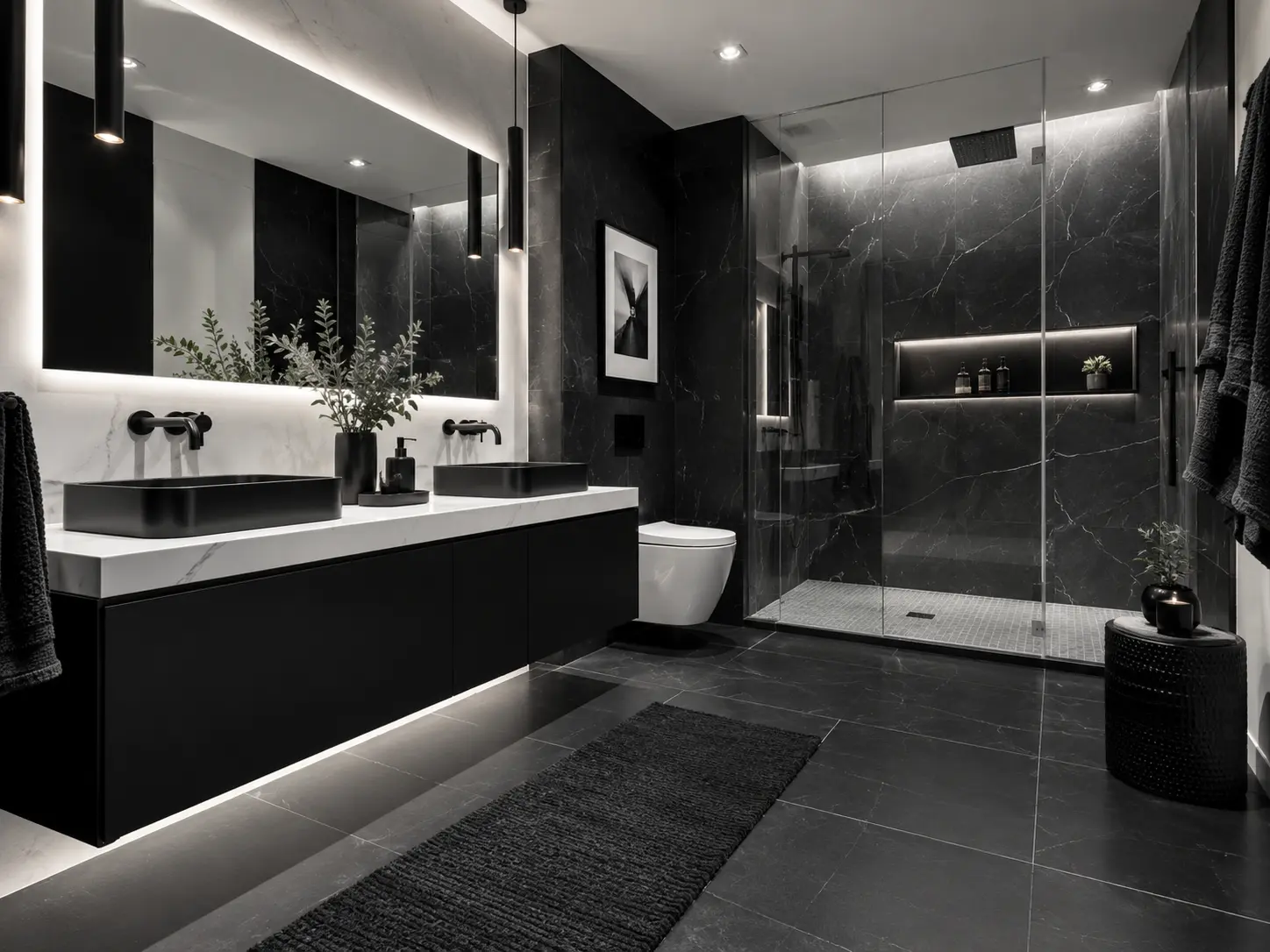
The three layers
Task lighting at the mirror
Light should come from the sides of the face, not only from above. Vertical sconces flanking the mirror at roughly 65 to 68 inches, or a well-diffused backlit mirror, eliminate the under-eye shadows that a single overhead fixture creates.
Ambient ceiling light
Recessed fixtures or a central fixture fill the room. In a shower, use a fixture rated for wet locations. Placing a recessed light directly over the shower and another over the tub keeps those zones from feeling like caves.
Accent and night lighting
Niche lighting, under-vanity strips and toe-kick lighting add depth and provide a gentle, low-glare source at night. On a motion sensor, that layer is genuinely useful rather than decorative.
Color temperature and quality
- 2700K to 3000K reads warm and flattering; 3500K to 4000K reads crisp and modern
- Keep every source in the room at the same color temperature — mixing them is the most common visible mistake
- Choose a high color rendering index, ideally 90 or above, so skin tones and finishes look accurate
- Dimmers on the ambient and accent layers let one room serve both morning routine and evening wind-down
- Confirm that the selected fixtures and the dimmer are compatible to avoid flicker
Electrical planning and safety
Bathroom receptacles require GFCI protection, and fixtures over a tub or in a shower must be rated for damp or wet locations. Separate switching for the vanity, ceiling and fan means you are not forced to turn everything on at once. Outlets inside a drawer or medicine cabinet keep grooming devices off the counter, and they need to be planned during rough electrical.
Electrical work of this kind is licensed trade work and, depending on scope, part of the permitted trades on a bathroom project. It is not a suitable do-it-yourself item.
Ventilation belongs in this conversation
The exhaust fan usually shares a circuit and a ceiling plane with the lighting, and in South Florida it is arguably the most important electrical device in the room. Size the fan for the room volume, duct it to the exterior with the shortest practical run, and consider a timer or humidity-sensing switch so it actually runs long enough after a shower. A quiet fan gets used; a loud one gets switched off.