
Building coordination comes first
Nearly every beach-area project begins by reading the building's renovation rules rather than the tile catalog. Beachfront and near-beach buildings commonly limit work to weekday hours, require the service elevator to be reserved for deliveries and debris, and ask for insurance documentation before a crew is allowed upstairs. Some have seasonal restrictions on construction during peak occupancy months.
Requirements vary by building and by project. Confirming them early lets the design, the material order and the start date line up, rather than discovering a restriction after demolition has already been scheduled.
Salt air, humidity and material selection
None of this is exotic; it is simply choosing materials that suit a coastal environment rather than fighting it. Units with balconies open to onshore breezes see the effects earliest, so it is worth discussing how you live in the unit before finalizing finishes.
- Fixture finishes: brushed nickel, PVD-coated finishes and quality chrome generally tolerate coastal air better than untreated or living finishes
- Porcelain over absorptive natural stone in wet areas, with sealing planned where stone is used elsewhere
- Cabinetry with plywood boxes and durable finish schedules rather than thermofoil over particleboard
- Exhaust ventilation ducted fully to the exterior, sized for the room and run after each shower
- Stainless or coated hardware for glass enclosures in units with frequent open-window ventilation
Typical beach-area bathroom layouts
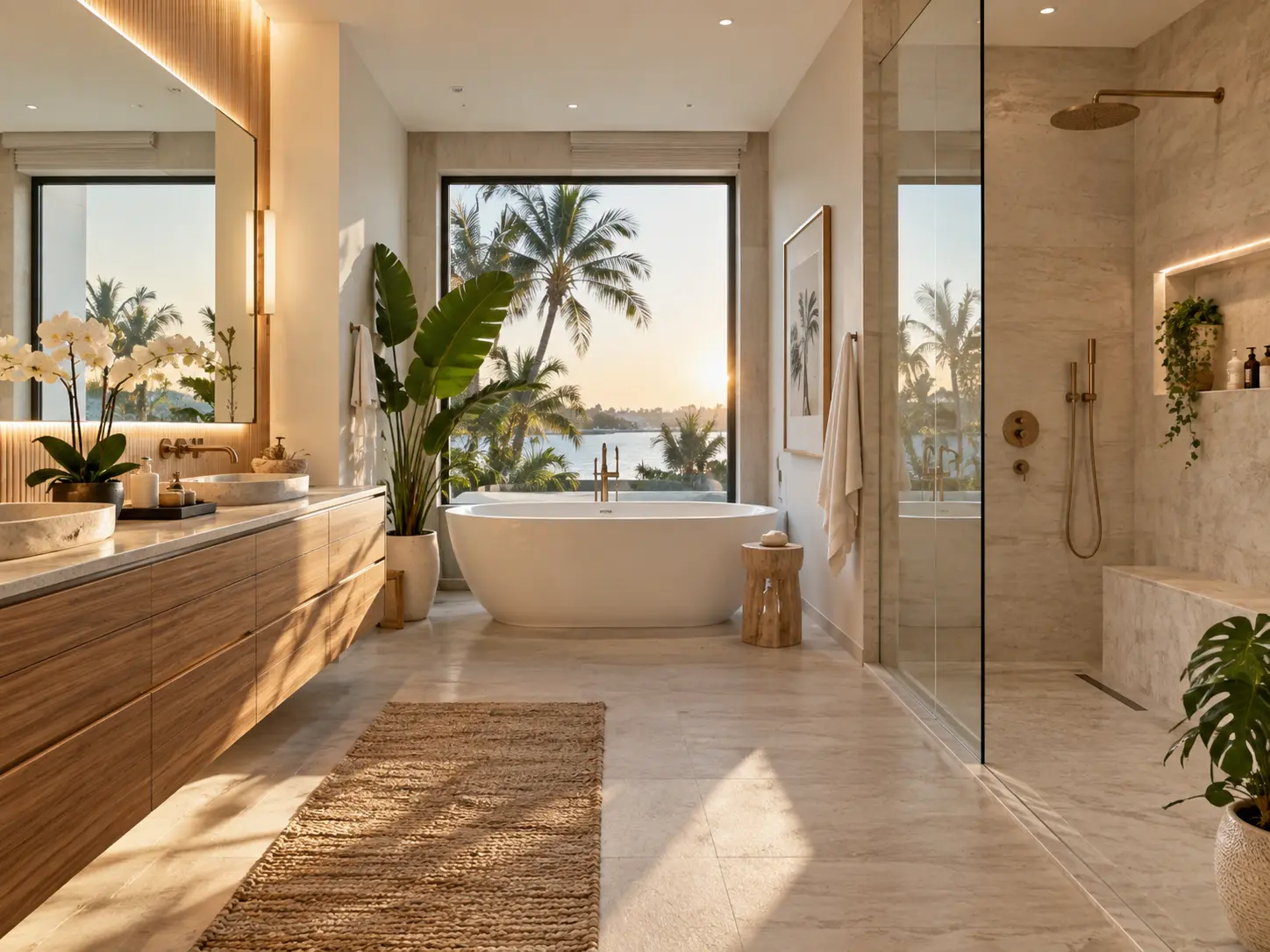
Many Hollywood Beach units have compact bathrooms built around a single plumbing wall, with a tub-shower alcove, a modest vanity and limited storage. The highest-impact changes are usually converting that alcove into a walk-in shower with frameless glass, floating the vanity to recover floor space, and replacing a small mirror with a full-width backlit one.
Because drain positions tie into the building's stack, layouts are typically optimized around the existing plumbing rather than rearranged. That constraint is less limiting than it sounds — most of what makes these bathrooms feel dated is the finish level and the enclosure, not the footprint.
Rental and seasonal ownership considerations
A meaningful share of beach-area units are second homes or seasonal residences. That affects two things: scheduling, since owners often prefer work to happen while they are away, and durability, since a bathroom used by rotating guests takes harder wear. Simple, robust specifications — porcelain, quartz, frameless glass with quality hardware and easily sourced fixtures — hold up better than delicate finishes in that scenario.