
Step one: get the building's renovation rules in writing
Requirements vary widely between buildings. This list is what to ask for, not what to assume. The answers shape the schedule and sometimes the design.
- Approval process and what the association requires in a submission
- Permitted working hours and days
- Service elevator reservation procedure for deliveries and debris
- Corridor and elevator protection requirements
- Contractor insurance requirements and certificate wording
- Procedure and notice for water shut-offs affecting a riser
- Any seasonal restrictions on construction
- Whether waterproofing verification or inspection is required
Understanding what can and cannot move
Bathroom drains in a multi-story building connect to vertical stacks shared between units. Moving a toilet or shower drain any meaningful distance requires horizontal drain runs with adequate fall, and the depth available above a concrete slab is limited. In many buildings that makes significant relocation impractical.
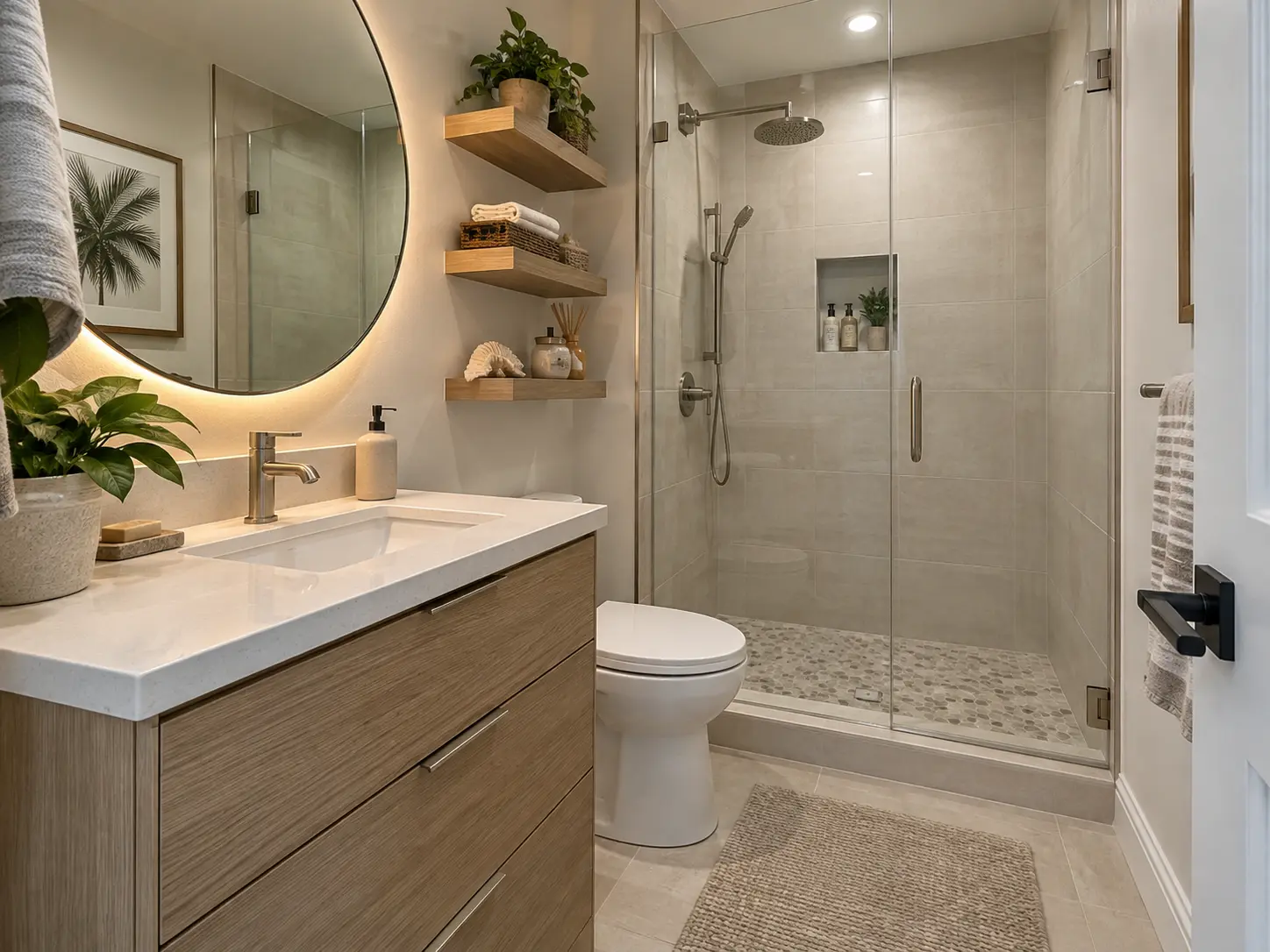
This constrains less than homeowners fear. The features that make a condo bathroom feel transformed — a larger shower in the former tub footprint, frameless glass, a floating vanity, a full-width backlit mirror, layered lighting — all work within fixed drain positions.
Waterproofing where a leak reaches a neighbor
In multifamily construction, a shower failure is not confined to your home. The standard is accordingly higher: a continuous bonded membrane across base, walls and curb, reinforced corners, sealed penetrations, a compatible drain assembly, and verification before tile.
Where a building requires a flood test or inspection at that stage, it is scheduled into the sequence. Where it does not, it is still worth doing — that is the last moment the assembly can be confirmed.
Logistics affect the calendar more than the labor
In a tower, material cannot simply arrive. Elevator windows are reserved, routes are protected, and debris leaves on the same constrained schedule. Restricted hours mean a day of work may span more calendar time than the same day of work in a house.
The practical consequence: a condo bathroom typically takes longer than an identical bathroom in a single-family home, even with the same scope and the same crew. Planning for that up front avoids a schedule that was never realistic.
Seasonal owners and remote decisions
Many South Florida condominium owners are not in residence year-round. Projects run well remotely when selections are complete before the start date, a single point of contact is agreed, photographs are provided at each milestone, and someone locally is authorized to grant access.
The failure mode is a decision requested mid-project from an owner who cannot see the room. Front-loading those decisions is the fix.
Permits and association approval are separate
Association approval is not a permit, and a permit is not association approval. Both may be required, they follow different processes, and one does not substitute for the other. Confirm the municipal requirements with the applicable building department and the building's requirements with management, early enough that neither becomes the reason work waits.